
OCJC Agriculture Students Attend an Agriculture Trade Show in Gulu
- Apr 8
- 3 min read
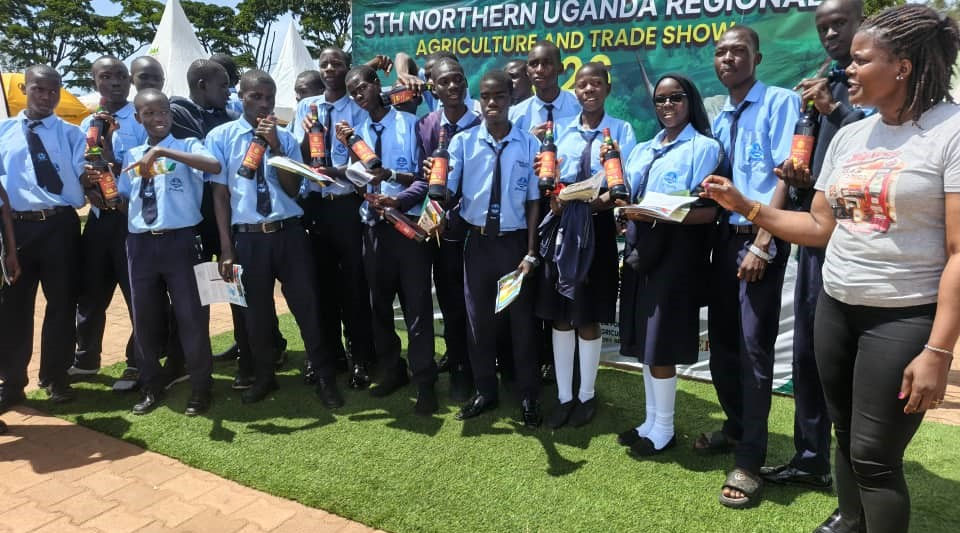
On 29th and 30th March 2026, OCJC students studying agriculture (S2 to S6) had the opportunity to attend an agriculture exhibition organized by the Ministry of Agriculture, Animal Industry and Fisheries (MAAIF) at Kaunda Grounds. S4 and S6 attended the exhibition on the 29th; S3 and S5 did likewise on the 30th.
The five classes have a total of approximately one hundred and eighty-eight students studying agriculture. As Lagum Concy, S3 class coordinator, reports, the students had to be transported in shifts since they were to use the school bus, whose capacity is limited to sixty-seven passengers. The students were accompanied by five staff members from the department of agriculture: Mr. Ogen Rwot Innocent (HOD), Ms. Ariokot Prosscovia, Ms. Aber Peace, Mr. Odoo Dick, and Mr. Olinga Emmanuel.

Lagum Concy reports that after their arrival, the students were split into different groups in order to ease movement, organization, and learning. Each group had a coordinating teacher who guided the group from one tent to another, introducing students to different traders and their products. As

Ms. Aber Peace reports, the programme was not simply another time for window-shopping but a serious lesson in its own right. Students were taken to the trade fair:
to see the innovations in agriculture in line with the competency-based curriculum
to interact with different exhibitors of agriculture-related activities
to understand how marketing and advertisement of agricultural products is done
to ignite a passion for agriculture-related career opportunities
to inspire students to be job creators in the agriculture sector.
True to expectations, the trip was worth it. As Lagum Concy reports, the students had the opportunity to interact with various traders. She highlights that traders enlightened the students on coffee farming, bee-keeping, the science of fertilizers, how farmers get access to funds to run their businesses, and how farmers utilize the internet as a boon to their business.

She adds, "We learnt about various traditional seeds—both existing and extinct—their traditional names, how to plant them, and the favorable soil and pH range in which they thrive." Furthermore, students had the opportunity to see first-hand various machines used in different agricultural activities such as ploughing, planting, and harvesting.

Adding flesh to Lagum Concy's skeleton, Ms. Aber Peace details that students were exposed to different areas of agriculture:
First, crop production. This includes aspects such as tree and crop nurseries, irrigation systems, organic and inorganic fertilizers, agro-chemicals, organic mulches, coffee processing, branding, packaging, and marketing of crop and animal products.

Second, agricultural machinery. This includes equipment such as a tractor, walking tractor, mower, water pump, grinding machine, feed-pellet machine, and feed-crushing machine.
Third, animal production. This includes poultry (chicks), animal feeds, bee-keeping, and preserved pastures (hay).
Fourth, value addition to products such as vegetables, fruits, and milk.

Reporting on behalf of the teachers who attended the trade fair, Ms. Aber writes that based on the reports written by the subject teachers, the objectives of the study were achieved; students benefited enormously from the exhibition, challenges notwithstanding. Ms. Aber's words are seconded by Concy, who reports, "The trade exhibition was very interesting and educative because we were able to learn about different agricultural products that we had not seen before, as well as getting constructive advice from different traders. The lessons learnt will help us in our everyday engagements as well as our future careers."


